Christian Petersen (Danish-American, 1885–1961)
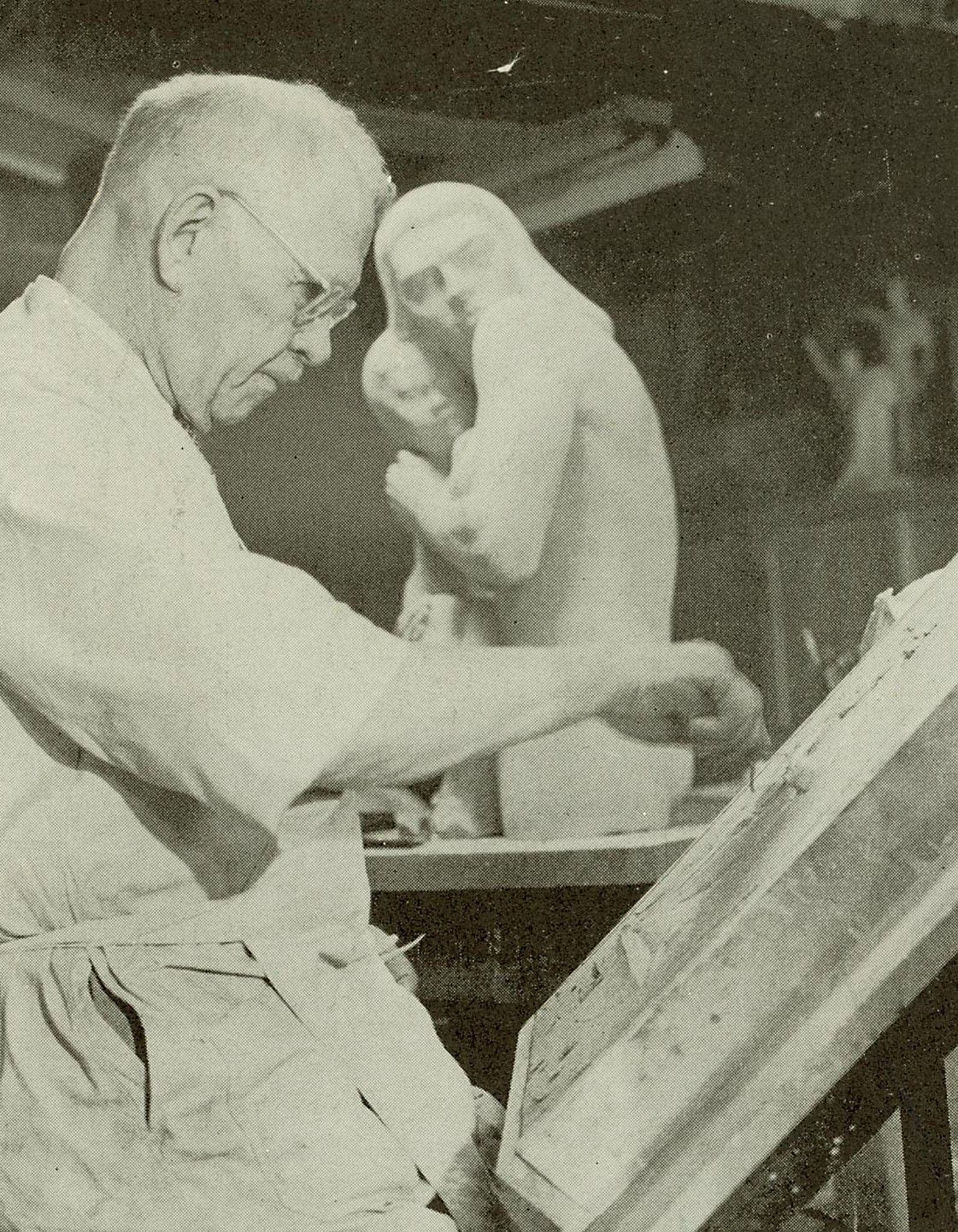 When one speaks of the legacy of Christian Petersen, usually his public art created for Iowa State is first to come to mind. During his twenty-one-year tenure, Petersen completed twelve major campus works of art and changed the way Iowa State would look forever.
Christian Petersen was born on February 25, 1885, in Denmark, and emigrated with his family to the United States when he was nine years old. The Petersen family settled on a farm in New Jersey where Christian Petersen completed his primary education. He then enrolled in the Newark Technical School where he learned the craft of die-cutting, the process of sculpting designs into metal models for objects such as silverware or medals.
Around 1920, Petersen apprenticed with Boston sculptor, Henry Hudson Kitson (1865–1947), whose best-known sculpture is probably The Minuteman of Lexington. From Kitson, Petersen acquired a firm foundation in the beaux-arts style that became popular in the United States during the late nineteenth century. Usually based on narrative subjects with symbolism, the beaux-arts style was commonly used in sculptures honoring war heroes and personifying national virtues.
In the years during and after World War I, Petersen received and completed numerous commissions for memorials and monuments, as well as portrait busts and plaques, but the work was sporadic, so Petersen continued to work commercially as a die cutter. However, in 1928, Petersen made a dramatic change in his life when he left the east coast for Dayton, Ohio, and eventually Chicago, leaving behind a family and a successful career to pursue sculpting as his full-time work.
According to Petersen, the “East has so much conscious culture that sometimes it suffers from indigestion.” At the time, Petersen felt the Midwest would eventually become a cultural center. Therefore, Petersen was most likely the first of many artists to act on that expectation, participating in a new art movement that would become known as Regionalism. Petersen’s plans for beginning a new career in Chicago were interrupted by the fall of the Stock Market in 1929, marking the start of the Great Depression. He returned to die-cutting for the jewelry company Dodge and Ascher where he met Charlotte Garvey. The two were married in 1931 (or 1936), and in 1932, Petersen once again returned to full-time sculpting.
During the Great Depression of the 1930s, millions of skilled Americans were unemployed and hungry, including many artists. Special programs were created to help these artists as part of the New Deal instituted by President Franklin D. Roosevelt. The Public Works of Art Project (PWAP) was the first such program intended to put artists to work on strictly supervised projects for the American public. Petersen was invited by Grant Wood, head of Iowa’s PWAP, to participate in this federally funded program. The two major projects of the Iowa PWAP were completed for Iowa State College (now University) in Ames: murals for the library and a fountain for the Dairy Industry Building. While all the other artists in the program worked on the mural project, Petersen carried out the Dairy Industry assignment independently.
Apparently, Petersen was the only professional sculptor in Iowa’s PWAP, as well as the only artist to transform his assignment into a permanent job. What was to have been a semester as a “temporary” position at Iowa State became this artist’s full-time residency for the next twenty-one years. Petersen was added to the college payroll in October 1935 by then College President Raymond Hughes and was expected to teach a class in sculpture and continue working on projects for campus.
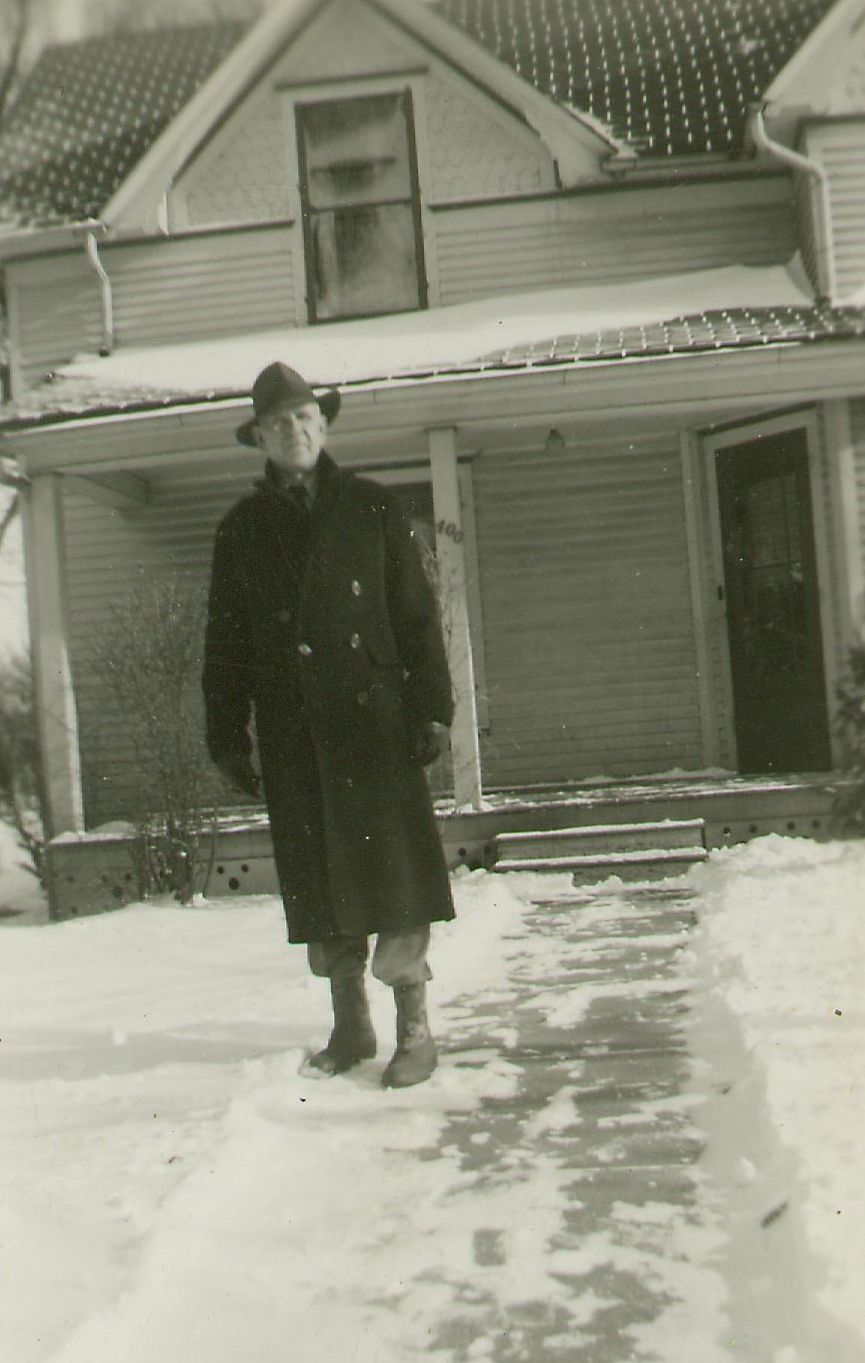
As a teacher, Petersen was a popular choice among students. His courses were offered as part of the Home Economics curriculum, and therefore, were only open to women. However, male students frequently attended his classes. By the spring semester of 1939, they were allowed to officially enroll in Petersen’s sculpture courses, which were typically filled to capacity.
The body of work produced during his time at Iowa State constitutes Petersen’s best-known sculptures. The sculptures are all representational and reflect the missions and themes of the various departments at the time. Petersen’s works of art are among the best of the Regionalist art produced in the 1930s and 40s, representing the history and culture of the Midwest. Petersen retired from Iowa State in 1955, and although he did not witness its installation, he chose the location for his last work of art produced for Iowa State, Conversations, just two months before his death in 1961. During his twenty-one-year tenure, Christian Petersen—an artist—permanently changed the face of campus aesthetically and academically, establishing a visual legacy at Iowa State University that is still honored today.